




The barrier between having an idea and reaching a million people has never been smaller. So why are most brilliant ideas still dying in someone’s head?
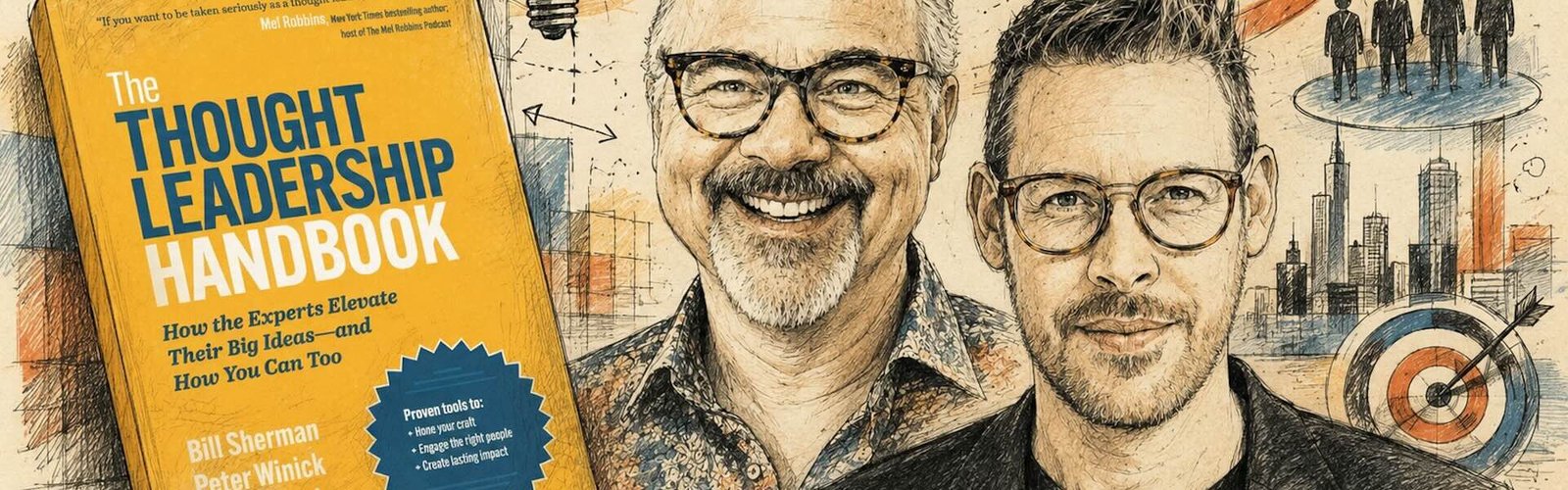
Get The Thought Leadership Handbook on Amazon: https://www.amazon.com/Thought-Leadership-Handbook-Experts-Ideas/dp/B0GT1S9QFY
TRANSCRIPT (AUTO-GENERATED):
Josh Allan Dykstra (00:00)
Hello, my friends. Today I’m welcoming my friend Peter Winick to the conversation. You y’all know I don’t do many interviews on this show, so they’re always really special. And this one is going to be fabulous. Now, Peter is the founder and CEO of an amazing company called Thought Leadership Leverage. He’s also the co-host of the Leveraging Thought Leadership podcast. I think he’s interviewed maybe all of the like celebrity tier business, right? Names and like business and leadership. Tom Peters, Dan Pink. Stephen freaking MR Covey, right? Like hundreds, literally hundreds more. so I would be lying if I told you it’s not a bit intimidating to be interviewing the interviewer. but I wanted you all to meet Peter because so many of you that listen to this show, you’re instigators and rebels and communicators and change agents. You believe we can help make the world better. And I believe that Peter has wisdom that will help us do that work more powerfully. So Peter, welcome to Hello Tomorrow.
Peter Winick (01:00)
Well that that’s a high bar and I’m really curious as to what I’m gonna say now. So Thanks for having me, Josh. I appreciate it. Good stuff.
Josh Allan Dykstra (01:04)
I know we we all are. It’s really a pleasure to to have you. So, you wrote a book.
Peter Winick (01:12)
Yes. Yes. Well I I did I did not do that alone. I I co wrote a book with with Bill Sherman and Naran Arielle. Yes.
Josh Allan Dykstra (01:13)
Yeah, I mean, I know. Yes, absolutely. So I’m curious, does it does it feel a little weird to be on the other side of the the interviewing, right? You’ve you’ve interviewed over seven hundred thought leaders, right? How how does it feel being on the other other side of the mic, so to speak?
Peter Winick (01:36)
Yeah, so it’s weird on a couple levels. I’ve been on this side of the mic a lot. I actually like it ’cause all I have to do is show up and react, which is kind of fun and and and different. but the the other other side is the other side of writing a book because I you know for years I I pretty much swore I’ll I’ll never write a book. There’s no need to write a book, etc. etc. And then of course, you careful what you say, cause life changes, things changes, and opportunities change. So now we’re on the other side of having written the book and and getting it out into the world.
Josh Allan Dykstra (01:38)
So what was the impetus? Why did you decide now was the time?
Peter Winick (02:09)
Yeah, so the backstory on the book is really curiosity, right? So we as a firm, Bill and I, have a ton of models and methods and frameworks and such that we’ve developed during our work over 20 years with hundreds of clients, right? Now, if we were to just publish that, that would be like reading an IKEA, you know, instruction manual, except it’s not in Swedish, right? So like Who cares? Who wants that? So a couple of years ago, about two two plus years ago, I had some a little bit of time on a weekend, so I started playing around like everybody else with chat, because that’s what like the cool dorky kids do, right? And what I was thinking is all right, I got all these frameworks. Here’s you know, here’s some assets that I have, because that’s what I do. I help thought leaders figure out how do you extract value from the intellectual property and the assets. And I’m like, I should probably eat my own dog food. So I’m like, all right, I got Two things I’m thinking about right now. I got all the models and methods and frameworks, but not much to do with that other than serve our clients and continue to refine them. And then I’ve got this huge body of work from the podcast. So at the time we had six hundred and fifty episodes done. Now I think the number’s seven twenty-five or thereabouts, right? So I took and we have all the transcripts on all of them, right? So I took the transcripts of 30 and and they weren’t a random 30. There was a category that I had them categorized under and said, all right, let’s dump this into chat and let’s play. Right. And I would start to ask questions. Hey, these 30 people, what would they think about this, or what might they say about that, or what are the patterns? And I and I got a little bit obsessed with it. And I’m like, holy cow, this is amazing. And then number two is holy cow, I don’t remember any of this, right? Like as if you were to say to me, hey Peter, what are the best interviews you did or episodes you did? You know, a couple would bubble up to the top, but it would be a problem of the recency effect, a problem of my memory, a problem of, you know, like whatever. Like I don’t know where my car keys are, let alone a conversation I had that was interesting in 2022, right? So I started to play with it. I’m like, okay, this is pretty cool. So I called Bill on Monday with one of those classic hey, got an idea, which as the you know, ADD CEO, big picture guy, that’s me, saying to the COO,
Josh Allan Dykstra (03:54)
Mm-hmm.
Peter Winick (04:21)
the deep analytical guy, the process guy, the systems guy, that’s typically an OS moment for Bill going, geez, what did this knucklehead do now? Cause this this doesn’t always end well. So I told him what I did over the weekend and I said, you know, it would probably be pretty easy for us to take our models and then go through the transcripts, because there’s a bunch of them, and get some stories that sort of validate our models and methodologies. And I said, you know, probably in 45, maybe 60 days we could knock out something that would be a decent book. And Bill was like, Yeah, that that might work. So then, you know, my next call is to my friend Naren. Naren is the founder and CEO of Amplify Publishing, and I say, Hey bud, I got an idea. I think I finally want to write a book. So his first response was, and of course you called me because you want to publish with me. And I said, Well, yes, but there’s only one caveat, right? And he and I think he thought the caveat would be, I don’t know, speed or a five percent discount or something silly like that. He goes, well, what’s the caveat? I’m like, Well, you’re gonna write it with us. And he was like, shit, Why do you want to do that to me? I’m like, because you have a really good perspective on these people as well that’s different from the perspective that Bill and I. And I think, you know, it’s not one on one would make two, but one plus one plus one would make more than three in this case. So he was like, Okay. So I call Bill back and I said, I got us a publishing deal. And he’s wait, I didn’t even start on this thing yet. I’m Yeah, but it’s only gonna take 60 days. Right. So well, lo and behold, the 650 episodes was two point three million words. To put that in context, the average business book is somewhere between 40 and 60,000 words, right? So it’s a lot. It’s like 50 books or like it’s a ridiculous amount. And we didn’t want to fall into and we did not fall into sort of the the slo bucket. Like we didn’t use this to write the book. We use this, as I think about it, as basically having six really, really good graduate research assistants without paying for pizza and beer.
Josh Allan Dykstra (05:52)
Yeah. Yep. That’s a lot.
Peter Winick (06:13)
And it spotted things and helped us and forced us to go back and have follow-up interviews and see things that we didn’t see. And that’s it. Now we’ve got a book. And so it took far longer than we thought, and which by the way, the only two things in my life I’ve ever done that are not on time or on budget are number one, renovate a house that is never an on time, on budget thing, and then number two, write a book. And I don’t think I’m all that special because if you know anybody that’s done either of those, they’ve they’ve probably been guilty of both.
Josh Allan Dykstra (06:30)
Yeah, it checks out. Absolutely. How how long did it end up taking y’all to get it done? You thought sixty days, but what what it end up being?
Peter Winick (06:45)
It took a while. I wanna say a probably a year and a half. Yeah. Yeah. Because it wasn’t just like, okay, here’s the model that’s here’s our impact equation model. Give me three examples of that. It was deeper than that. And we learned things and we saw patterns that we didn’t realize before. So it was great. It was awesome.
Josh Allan Dykstra (06:47)
So tell me tell me a little more about that. Hundreds and hundreds of conversations, millions and millions of words. As you were looking back through this archive of these past conversations. What was there anything in there that really like surprised you as it as it came back?
Peter Winick (07:24)
Yeah, a couple things surprised us. Number one, it actually really did a nice job of validating a lot of the models and methods and frameworks that were in there, right? So we develop those in reality. We’re not academics. Like Bill has more of an academic bend than I do, but we’re not academics where we have the luxury of just like, hey, let’s just go research something for five years and see if it’s a thing. We develop things in the tools in the field in service of our clients while we’re actually solving real problems, right? So it was really cool to see them further validate it by saying, you know, this pattern holds, you know, our impact equation holds, the e the the the experts’ paradox holds. And and what was Further interesting to that was most thought leaders are operating I don’t want to say in a vacuum, but they’re in isolation, right? So if you think of any other profession, an accountant, a dentist, a doctor, a lawyer, what do they do? One of the things that they do is hang out with other doctors and dentists and accountants and lawyers. They go to conferences, they go to events, they read journals. Why? Because they’re trying to share and make their field a better place. Most thought leaders aren’t doing that, right? They do their thing. They’re not on the the sideline on the Saturday morning of their kids’ soccer league talking to five other New York Times bestselling authors, right? Like that just doesn’t happen. So I think that sharing what we learned with others helped them realize, like, hey, they’re not so special. And what you’re experiencing might seem odd or difficult or painful or unusual, but it’s actually given your circumstances and live given where you are, fairly predictable and common.
Josh Allan Dykstra (08:46)
It seemed to me as I was reading too that you’re also in a way kind of calling for more organization or coordination or more kind of a container or something around like the field of thought leadership. Am I kind of picking that up correctly? That you’re saying, Hey, this is this is something that deserves a little bit more definition, or how how would you how would you put put that? ‘Cause you’ve thought about the idea of thought leadership probably more than anybody that that I know, certainly.
Peter Winick (09:20)
Yeah. So there’s a couple of things that we see. So one is, and this probably started early COVID, pre-COVID, ish, more and more large organizations outside of the traditional ones that did this, which were mostly professional services and all that.
are practicing thought leadership. And what do I mean by that? Instead of saying, hey, you know, and this is basically financial services, high tech, professional services, and others. So let’s take financial services, right? So, and no no offense to my my many of my dear friends in financial services, but an FA is an FA is an FA. A private wealth guy is a private wife wealth guy or gal. And whether you’re at Goldman or Morgan or Merrill or whatever, guess what? They’re all pretty much the same. Right. And and and that’s not that’s not meant as a slight, right? So
If I were an FA or a private wealth person and I was trying to grow my book of business, serve more clients, et cetera, what do I do? Right? Well, I could do the things that everybody else does. I can, you know, hold the steak dinner and I could, you know, ask for a referral. Like there’s a whole playbook of things to do. Why? Because there’s tens, if not hundreds of thousands of people that do this and there are best practices and whatever. Okay, well, what if I went about it a little bit of a different way? What if I use thought leadership as a way to stand out from the crowd? What if I use thought leadership as a way to get ideas out?
What if I did that? Right. So we’re seeing a lot more of that in new fields. And then the question becomes, how do we as an organization effectively develop, curate, and deploy thought leadership to meet our business goals? And the business goals are probably standing out from the competition, elevating your brand, net new client acquisition, you know, there’s sort of those sort of things. And for many, it’s punching above your weight, right? So that’s that’s a big trend that I see.
Josh Allan Dykstra (11:05)
I like that. That makes a lot of sense. when I when I read through your book, I really thought this is this is actually a book about how impactful ideas actually move through civilizations. So this is this is my lens. Have you thought about it with with that lens at all? It’s it’s not just about authors and speakers, right? Like you’re doing something bigger here. How do you think about it?
Peter Winick (11:22)
Yeah, it’s funny that you say that because one of the things that Bill and I developed is what we call the impact equation. So we’re wonky, we like formulas. So the impact equation is this it’s the idea simplicity times the audience relevance times the velocity times the audience share. That’s the formula. Now, if any of those, if any of us, I’m not the greatest math student, but if any of those variables are zero, guess what? Equals zero.
Josh Allan Dykstra (11:49)
Mm-hmm. I thought that was very cool.
Peter Winick (11:57)
So idea simplicity. That means if it’s overly complicated, you get a zero. Right. How many times do you talk to somebody and say, Well, tell me, tell me what you do? And they tell you, and you’re like, I have no idea what that person just said. And then you try again. Well, tell me, try to explain that to me as if I was a nine-year-old. Okay, you still don’t get it. Right. And and some of this is is jargon, some of this is training, academics are train like whatever. But like if you think about the best business books you’ve read, good to great, three words. What is what is this book about?
Companies that went from good to great. That’s something that’s interesting me, right? Speed of trust. Now, three words doesn’t it doesn’t need to be three, three words, but what is what is that telling you? Something about speed and trust. Interesting, right? seven habits of highly effective people. Tells you what it is. It’s not easy to be simple. And and I think a lot of thought leaders struggle with that. So that’s really the platform piece. And then you look at sort of the audience relevance.
So I it took me a long time to realize that I am completely irrelevant to ninety-nine point nine nine, maybe nine nine nine percent of the universe. And that’s fine. Because although I have a healthy ego, I just flip that and say, okay, well, that means I’m somewhat to very relevant to point one percent of the world. I just need a lot of spend a lot of time figuring out how to make sure I’m relevant to that population, right? And that’s what I need to do. So that relevance piece.
Josh Allan Dykstra (13:15)
Yeah. Yep.
Peter Winick (13:18)
That’s really hard, right? Like to say, I want to be most relevant to people like you, Josh. How do I do that? Well, I put out good content. I I you know, there there’s a series of things that I do to increase the relevance. Because I could go from relevant to irrelevant. You’re gonna be like, All right, Peter, no need to open your newsletter anymore. You’re now you’re talking about being a yak farmer and baking quiche. I don’t care, right? And then sort of the next piece of that is velocity, which is speed. And there’s individual velocity. There’s like if I’m talking to you right now, I can’t be talking to anybody else. That’s dependent on me.
Josh Allan Dykstra (13:24)
Mm.
Peter Winick (13:48)
And then there’s more systems velocity of how am I getting my stuff out there like our podcast where I record it once, like you’re doing, and people can listen to it, multiple people can listen to it whenever they want all over the world. And then what is the share of the audience? And by share of the audience, this isn’t Nielsen rating, the audience that’s relevant to me, or the is the community that I care about listening to, absorbing, sharing, etc. So that’s the the impact piece. And, you know, I haven’t thought about it in the way that you framed it, but well, that could, you know, apply to any good idea.
Josh Allan Dykstra (14:06)
Yeah.
Peter Winick (14:18)
And yeah, it could. I guess I guess it could. We did think about it in the context of what great thought leaders or aspiring thought leaders need to be doing. And different ones started, you know, you might have someone that’s got a really, really simple idea, but they’re fuzzy around their audience relevant. So everybody’s how you solve that problem is different for everybody.
Josh Allan Dykstra (14:27)
Mm-hmm. Mm-hmm. I love that you brought I brought the formula in. For folks listening to this, right? Because I I think there’s folks in this tribe that have really good ideas and we want to make the world better. But the question is how do we get them to spread? Right. So I love that this combination of making sure it’s simple, right? Making sure it’s relevant, making sure it can move with some sort of velocity. And then making sure that you’re getting you’re capturing some sort of right percentage of your your audience that actually cares about what you’re trying to talk about. It’s great.
Peter Winick (15:07)
Yeah, and it’s dynamic because you might have a ton of velocity today and then something might change where you don’t in six months. You have less velocity in six months. So then you have to say, Okay, well, what is it that I need to do now? Maybe I’m only on LinkedIn and I need to go to somewhere else, or I’m only writing articles and I should go to sh like there’s different things that you could do to answer that question for you to increase your velocity.
Josh Allan Dykstra (15:12)
Yeah. It’s a great, I think it’s a great framework for us to those of us who want to make a difference, for those of us who want to make an impact, right? These are just great kind of criteria, right, for us to think through about how are how are we actually doing that? So my next question for you, Peter, is obviously we’re drowning in information, right? We’re drowning in content, we’re drowning in other people’s opinions, but then at the same time the barrier between the idea and the audience really has never been smaller. Like it’s it’s the barrier between me and the people, right? Like we can do these things, right? And anybody who wants to listen to can and it’s very, very accessible, right? So there’s this kind of like dichotomy, right? There’s this this paradox of like we’re drowning in in so much, but it’s still but it’s at the same time really easy to access people. Do you think it’s harder or easier the to help good ideas spread?
Peter Winick (16:26)
I think actually both. So creation is one thing, curation is another. So up until very recently, like really, really recently, the world was, you know, information was scarce. It just was, right? And and I remember, and I’m not that old, as a kid, every year getting the update to my brown and gold Encyclopedia Britannica, right? And I would look through that and look through that and say, here’s all the kind of the new stuff. Imagine now waiting a year to get an update on stuff, right? When we’re where we’re you flooded. So the information scarcity switched to information abundance, which is good and it’s bad, because now I could not possibly keep up with all the things I’m curious about or interested about at the speed at which it’s coming at me. I just can’t. So that means I need to depend on others that I trust to curate. Now, the irony here is it used to be that was actually the job of the traditional publisher.
So if I if I, you know, someone was published by a Wiley or Random House or whatever in business books, right? You’d say, okay, well, one of the reasons that they exist is because for every, I don’t know, I’m making up a number, fifty people that submit a manuscript to them, one gets accepted. So they’re kissing a lot of frogs. So anything that they put out doesn’t mean it’s all going to be amazing. but it’s gone through a vetting process, a curation process. The fact that you and I can get direct to an audience without the curation is good and bad. Right. So you’re in essence curating guests and ideas. So if somebody knows you and loves you and trusts you, they’re going to extend that trust to say, I don’t know who this Winnick guy is that he had on, but Josh tends to bring on somewhat interesting people. So I’ll give him the benefit of the doubt. Right. So we trust people that curate now more and more and more. Right. And it’s not just the creation. It’s, you know, i it used to be if you bought a book… All right, what’s the big deal? It’s 20 bucks, it’s 30 bucks, whatever. You’re either gonna like it or you don’t. I don’t really care about 20 or 30 bucks, right? Like I’ve wasted like so what? What I care about is I don’t want to waste six hours of my time because that I can’t get back. The 30 bucks, I’ll that’s nothing. So now it’s like, hmm, how do I know I want to invest in the book? And by invest I mean my time. It might be I saw some videos that Josh did. I saw some articles that he did. I heard him speak. I I got a little sample here and there. And then when and if he comes up with a book, I’m like, all right, I kind of get what he’s about and I trust him and he puts good stuff out there. Sure. I’ve I’ve nibbled around the edges. Now I’m willing to make an investment of four or five hours in there.
Josh Allan Dykstra (18:53)
I think that’s a really, really good distinction. You talked a little bit about A.I., but I’d love to hear a little bit more thoughts on this. Because especially in in in the intersection of getting good ideas out there and and content, and right AI can just create a lot of the same output that thought leaders output, right? They generates ideas, it writes articles, it makes frameworks, right? So what’s the uniquely human thing here?
Peter Winick (19:13)
So what I would say is is a couple things. I love A.I., I think it’s really, really cool. That being said, I think there’s the speed at which we’re being served regurgitated garbage is is just lightning fast. And I think that you know, there’s a sniff test. I read something or look at something and I don’t know what it is, and it’s not that I’m smarter than the average bear. Within two sentence I’m like, this is A.I. garbage. And if I could smell that you’re putting out A.I. garbage, your your reputation just went to crap in my in my brain. Right. You don’t get to do that twice today. Right. Now, where it’s amazing, where it’s brilliant, where it’s the greatest tool ever created, is where it’s invisible. Right. So I don’t believe that anyone will read our book and say, my God, that’s AI slop. Why? Because it’s not. Now they might say it’s a crappy book. Great. Three of us wrote a crappy book. That’s possible. Right. But three of us did not. Put in five prompts and say, give me, you know, fifty thousand words that pretend to do this, that, and the other thing. So I I think the issue is like any other tool, how are you going to use it? Where are you going to use it? Where are you not going to use it? Where do you trust it? Where do you not trust it? Et cetera. and we’re in an unknown, unknown, you know, area now where it’s happening so fast and every release and you know now they’re coming out with releases and the government says you gotta roll it back and like, whoa, like it’s it’s crazy time now. So I think the, you know, the thing would be, you don’t need to be the first kid in your block to be using the latest version of it. Like you don’t, but how does it fit into your world? How does it make your life better? How does it make your world easier? How does it give you access to different thinking?
Josh Allan Dykstra (20:48)
I think yeah, sometimes I run run into this too. As a as a thought leader, as a content creator. right. There’s there’s plenty of of folks in the comments who’d be like, did you use A.I.? Did you right? And there’s this like it’s a it is a really interesting time. And part of me really thinks about there’s some aspect of AI that’s a little bit like a power tool and depending on the work that you’re trying to do. It would be really stupid actually to not u build your house using power tools. Right? It would take twice as long, probably cost twice as much, right?
Peter Winick (21:20)
And you’re not gonna get more from it saying this is these nails are “organically hand hammered.”
Josh Allan Dykstra (21:25)
Hand hammered. Yeah, exactly. So there’s there’s a there’s a goofy part of the argument there where it’s like if if the tool is being used well and it’s creating good content, good art, I think to your point, then it it would be really silly for for those of us in the spaces where it helps us to not use it. And also to your point, I think it’s yeah, we’re all tired of of the the slop already. We don’t need more of that crap… it is an inter it’s an interesting time though.
Peter Winick (21:34)
Sure. But the slop is sort of like… the way I think about the slop is if I was unsure if you’re you were an idiot or not, and then you put it out, now I’m sure that you are. Right? Because it’s still your name, right? It’s your name on it. So why would you put your name on something that you’re not proud of that you don’t think is good? You know, and the answer is, because it’s easy, it’s cheap, it’s fast, it’s quick, it’s whatever. It’s like okay. Yeah, there are a lot of things that are easy and cheap and whatever, but does that is does that really help your brand long term?
Josh Allan Dykstra (22:05)
I like that distinction though. It’s simple but it’s it’s profound, right? ‘Cause it’s like, yeah, do I feel do I feel good putting my name on this? It’s actually just a really good simple thing, right? And it’s like, yeah, I feel like if this helps me create a better piece of communication or a better piece of art or a better piece of you know, whatever I’m trying to put out there and I’m happy to put you I’m I feel proud to put my name to it. I think that’s a good that’s a great test, Peter. I like that a lot.
Peter Winick (22:43)
Or how did it make it better? So, like, for example, a lot of my clients are keynoters, and one of the ways that they’ve been using chat is they’ve got their keynote and they’ve delivered it and they delivered it, they know where it works. And then they might say, Hey, next week I’m giving a keynote to a group of actuaries. Could you give me three stories that are different than the ones I use that would resonate more with an actuary, including a bit of jargon and maybe a new regulation that was passed on that is something like like unless you’re in that space you wouldn’t know. And you’re like, Okay, that’s making it better. Right? You know. or or also teaching your A.I., and there’s been a lot of research done on this, give it permission to criticize you because there’s been a lot of data that shows it it placates you, it tells you you’re brilliant or whatever.
Josh Allan Dykstra (23:13)
So helpful. Yep. Yeah.
Peter Winick (23:28)
And you gotta tell it like, “I want you to be the most critical editor I ever had writing this article. I want you to be the most skeptical audience I ever got in front of as a keynote.” That’s the fun stuff. We don’t need somebody else to tell us, you know, we’re good looking, we’re smart, we’re this, we’re that, whatever. Like that’s delusional and it’s not helping anything other than maybe making it you feel you know, that’s a bit of a sugar high to make you feel better.
Josh Allan Dykstra (23:32)
Yeah. Another great, great use case. I agree. let’s switch a little bit. I want to talk about the future. We talk a lot about the future on this this show, of course. It’s called Hello Tomorrow, and this show is really about making sense of what’s next, but we’re not just, you know… the aim isn’t just to help people know what’s coming. This isn’t a “trends” show. We really want t people to understand the WHY behind these shifts, like why are these things happening? What are what are the systems kind of behind the scenes that make the world run the way that it does.
By the way, I really liked how you grouped your thought leaders by the “why” behind their message. I thought that I thought that was great. I’m trying to be a Hall of Famer. I don’t know if if that’s something one can aspire to be, you know, before they are! But I think a LOT about the legacy. That’s kind of why I do this.
Anyway, let’s let’s zoom out for a second. I I really believe that a better future starts out as an idea. Right? So I think I think it always starts an idea as an idea. So when you think about humanity over the next 50 years, what ideas, is there an idea or multiple ideas that you really hope spread?
Peter Winick (25:02)
Yeah, that’s a that’s a big question, right? So there’s lots of ideas that that should be spreading. And I think I’ll answer it slightly differently. What’s happening now is is the echo chamber, right? And this isn’t just a personal choice, it’s the way a lot of the social is designed or whatever, give you more of what you got, right? Give you more of what you got. Give you more of what you right. So I call it the purple sweater phenomena. If you and I were walking down the street and I said, you know, hey Josh, I’m thinking of this purple sweater that I saw the other day at Lululemon and I think I might buy that, right? But what happens next? What happens next is everywhere you go online, they’re everywhere. Right. Like now it’s in my Facebook feed. And I’m like, okay, there’s a creepiness to this. And at some point I’m either going to buy the damn purple sweater just to make it go away. Right? Or it eventually goes away on its own, right? So we’re influenced by forces larger than our than ourselves here. And then I think it’s the echo chamber. And I think the big idea would be can can we just agree to disagree civilly? Right? And and you know, it it’s so manifest in politics and ideas and other things. It’s like the objective of you and I having a conversation where we don’t agree, my objective isn’t to convince you you’re wrong, I’m right. Like that’s a stupid objective. The objective should really be, let me state my case. Let me tell you why I think what I do. You tell me the same. And then we could just say, okay, and that’s that’s all we’re gonna go for here. And at some point I might think, you know, while I don’t agree with Josh on that issue. I understand why he thinks what he does and why he might. And maybe if I grew up the way Josh grew up or maybe if I had the life experience he did. I think that would be really nice versus this everybody’s doubling down on their own stuff. And and you know, the worst thing I can hear is well, ’cause I love sort of getting to the f when people say things that are just not factual, and I say, where’d you get that from? Like instead of like what I’m really thinking is, you’re a moron, like the you know, the world is not flat, the world is round. Who told you that it’s flat and why were you dumb enough to repeat it to me? Like clearly that’s not a fact. And so I read that somewhere. And the problem that one of the problems that I see now is read that some somewhere could be your dopey uncle Larry versus, you know, someone that you should listen to. And maybe your dope dopey uncle Larry’s a good guy, but is he the one that you would listen to for medical advice or financial advice? Like whatever. Like so that’s really part of the problem right now.
Josh Allan Dykstra (27:26)
Yeah, yeah. Well, one of the things we do talk a lot about here is -isms, right? So whatever whatever your particular -ism is, right? Capitalism, socialism, communism, feminism, right, whatever, right? We’ve all got these -isms. And the the challenge that that I find when we start to talk about really big kind of the big systems that shape the world, we drift into these -isms very very quickly. And the problem with -isms is that they’re like sports teams. And this the moment I associate with an -ism like I associate with my sports team, it’s like it’s like my the whole like frontal lobe of my brain like stops working, right? Because all of a sudden I’m just cheering my color instead of actually thinking through, like, what are what are actually the pieces in here that I agree with or maybe don’t agree with. So we continually kind of try to deconstruct some of that. And so I absolutely see some of that in what you’re saying, when we can’t agree, we can’t agree to disagree, or we can’t even have a civil discourse. I think part of it is the “sports team effect” of these different -isms that we’ve we’ve ascribed ourselves to.
Peter Winick (28:34)
Yeah, and the sports team is interesting. Like, I’m not a big sports guy, but it’s so weird that like, you know, I grew up in New York, so I’m a Yankee fan. I could be a Mets fan, but that’s far too painful. so I’ve been a Yankees fan for for far l as far as I can remember. But you do get this reaction when you when you’re somewhere and somebody’s wearing a red sox hat, like, guy’s an idiot. I’m like, that guy might be a Nobel Prize winning brain surgeon. Why would I think he’s an idiot? Like like like but that like re because some dude walked down the street with a red sox hat on. I’m like Huh? Like, okay, that doesn’t like I don’t know anything about that guy other than he’s got poor taste in in baseball team choice.
Josh Allan Dykstra (29:02)
Right. Yeah. When we start talking about ideas that that shape the future, I think this becomes a a big one is for us to try to get underneath the -isms. And I’ve made a commitment on this show to actually stop using these terms because I find them just like practically useless in a dialogue, in a discourse, because then all of a sudden we’re debating kind of the etymology and the history of all of the stuff that comes with these belief systems, instead of “Let’s just talk about the kind of future that we want.” And what I find is that when we start to have that conversation, you know what, we actually probably agree a lot more than we don’t. You know, there’s a future out there that we want to have. And I imagine a lot of your clients fight for a lot of these, right?
Peter Winick (29:56)
Right. So stay there for a minute. So you’re you we ran the Red Sox hat, I’m wearing the Yankees hat. And if we both agree to take off our hat and just have a beer at the bar, we’re gonna realize, well, hey, what do you like? I like baseball. Hey, I like baseball too. What do you like? I like my home team. I like my like you’re right. What do you like about baseball? I like the strategy or I you know, I like whatever, the way pitchers are doing something different or the way they change some of the rules this year. It’s like, yeah, we all have that in common. And if you start at that place, that’s better than saying, Yankees are great, Red Sox suck, ’cause that’s not gonna get anybody anywhere.
Josh Allan Dykstra (30:26)
Right. Yeah. Yeah. Now we’re just fighting. I think there’s a really good principle in what you’re saying, right? Go deeper on it and and then we can find more common ground. ‘Cause I think it’s there, we’ve just kind of living up “here” at the “sports team level” and it… and I’m not sure it’s it’s serving anybody.
Peter Winick (30:35)
Yeah. But I also think it’s it’s everyone’s entitled to an opinion. I’m just not obligated to listen to it, right? So like who I choose to listen to for what matters. So the tagline that we used for a long time at Thought Leadership Leverage was deep expertise in helping those with deep expertise. So there’s an implication there that the people that we’re working with actually have the deep expertise. So it doesn’t say deep expertise in helping any idiot that wants to grab a you know, bully pulpit. Right. There are people that do that, and that’s sort of the difference between sort of our client base and the influencers and all that. So, you know, if you were to say, my God, I just figured out this this way that I don’t ever have to pay income tax again and there’s this tax shelter and whatever, it’s first thing I’d say, Well, who told you that? my god, this dude I met at the bar, he was three whiskeys in, but you know, like it sounded like a really cool thing. And I’m like, Okay, did did he did he cite the law? Is he a CPA? Like there’s a couple questions you would ask, right? You know, just say and then then I realize I might to you know what Josh, maybe you were buzzing a little bit too, but that was just another drunk at the bar. And I don’t think you should stop paying your taxes because another drunk at the bar told you so.
Josh Allan Dykstra (31:49)
You’ve made this your career, right? You’ve intersected with with these kinds of people more than almost anyone… have you have you ever come across an idea that’s really like resonated with you, that’s really changed you? Like, where you connect with something that one of these thought leaders is about and they’re trying to do, and the idea that they’re trying to spread and it’s like literally made a difference in your life?
Peter Winick (32:22)
Well, you know, it’s… I would say there’s dozens of those. Like when you think about the history of emotional intelligence, for example. So that’s been out and about in the field in a big way for 25 years. So when that came out, believe it or not, that was radical. Wait a minute. I’m a leader, I’m this, I’m a manager. Like now I gotta understand how people think, how they feel, empathy, all this other stuff. I’m a technocrat. Like I’m I’m really good at what I do. Empathy. Why do I care about how you feel? Right? Well, guess what? If you were interviewing someone or to were to be a manager today and they said, you know, I don’t do that emotional intelligence. So I left. Like you’re not gonna hire them. Like it’s just it’s so part of what we are and what we do and how we operate today. Now maybe we just didn’t use those words 25 or 30 years ago. Maybe it wasn’t popular to talk about that. And even when you think about you know, psychological safety. So that term happened to come out in in a big way during COVID. Okay. It wasn’t invented right by by the by the group that came out with that… Amy Edmondson, when she came out with that, with all respects to her, she didn’t create psychological safety, but she put out that that concept out there in a different way at a really amazing time to say, yeah, that’s the thing. Right. I didn’t have words to describe that thing. But the reason I don’t like going to work is I don’t now that she described it and defined it, I don’t feel psychologically safe here. I feel threatened. I feel like I can’t be myself. I feel like you know, all the things. But now we have a great way to use it and say, we as an organization honor psychological safety as part of our culture. It’s a polite way of saying don’t be a jerk to somebody. Don’t be abusive to somebody. Don’t be a bully to somebody. Right? So now that term is part of the lexicon.
Josh Allan Dykstra (34:58)
Well and what a what a gift, I think, right, to be a to be kind of part of that field, right? To be part of the part of these things. Cause what a it’s it’s very fascinating to me that these ideas, right, to to your point about emotional intelligence, it was it was crazy when it first came out. Right. And now it’s now it now it’s completely standard, right? And now it’s like to you to exactly to your point, we wouldn’t hire someone without it. And to see that evolution and to see that kind of diffusion of an idea like into the way that we work, I think is is what what’s probably what all thought leaders hope for. We hope that we’re putting something into the water that’s that people are actually going to drink and it’s gonna be become part of the part of the systems and part of the lexicon.
Peter Winick (35:47)
Yeah.
Josh Allan Dykstra (35:51)
So I think those are two really, really good examples ’cause yeah, then psychological safety we’ve really seen that happen. Yeah, just in the last less than a decade.
Peter Winick (35:58)
But then you have to look at the other side of that, right? So we’re talking more and more and more today about collaboration. Collaboration’s great for the most part. Now, that being said, if I was the captain of a fire truck and pulled up on scene at a fire and the building’s burning down and people jumping out of the windows, we’re not gonna start collaborating at that point.
Josh Allan Dykstra (36:57)
Yeah, and putting the concept in the right place, I think, is what I hear you saying, which is really important. In my work, what we would say is actually the psychological safety should have come first. It should have come in the in the building of the the team who’s gonna go like in the fire department itself. So we’re actually building a lot of camaraderie and we’re building a lot of psychological safety inside the team. Because what that will do is then once we’re in an emergency, we can trust each other to you know take care of the pieces we all need to take care of. So yeah, but to your point, it’s gotta go in the right spot, right?
In intersecting with all of these great ideas, is there anything you’ve really changed your mind about? Have you ever have you been like just super frickin’ wrong about something or where you said, you know…
Peter Winick (37:48)
Well, I’m wrong about things I’m wrong about things all the time, right?
Josh Allan Dykstra (37:51)
Yeah… anyone you can think of where you’re like “working with this person, it changed my mind on something” or you know, really made a difference and it made me think differently?
Peter Winick (38:02)
Yeah, that’s interesting. I think and some of it might come with age or maturity or whatever, is you know, the difference between intrinsic and extrinsic motivation. So typically when you’re coming up the ranks, right, you are taught, now it might be different now, right? Like that the motivation is extrinsic. Work harder, get a bonus, work harder, get a raise, work harder, get a promotion, like all that stuff. Well, what about the work for the work’s sake? Like, that’s not talked about a lot early on, particularly like I grew up in New York and you think about sort of the culture of finance, right? There isn’t anything more extrinsically motivated for the most part than financial folks, bond traders and and investment bankers or whatever. but what do you do in a in a in a world where people are actually looking more for that intrinsic piece? And if you’re only rewarding the extrinsic, you’re gonna be paying more for what you don’t need to, but why don’t you give them what they want? So I I one of I I think that as sort of a philosophical shift some years ago was like, one’s not bad and one’s not good. You just have to understand when, when and where and why, and you know, all that, right? Like most I would argue most nurses, right? yeah, they’re gonna get a raise and get paid better if they do more work and all that sort of stuff. But are they gonna go that extra mile to save the dying grandmother? Because they’re going to get a go from a 2% raise to a 3% raise in nine months when their review is up. That’s absurd. Right? Like that’s just not that’s just not the way they’re wired, right? But they do want to go home that night and say, you know what? I did everything I can to save Mrs. Jones and I made her more comfortable. And you know, it it didn’t show up in my bank account, but I really feel good about what I do and why I do it.
Josh Allan Dykstra (39:27)
Yeah. I hundred percent I agree. So much of my work over the years has been kind of focused on that intrinsic motivation side. So yeah, I couldn’t agree with you more. It’s it’s it’s and it’s still kind of underutilized, I think, and under under understood or under-appreciated in a lot of workplaces.
Peter Winick (39:55)
Well, the data shows us that people do more for the intrinsic, yet organizations are still for the most part rewarding extrinsically. So there there’s a huge gap there. It’s closing, but it’s got a lot more way to go, right?
Josh Allan Dykstra (39:59)
They do. That’s a really yeah, great example.
All right, let me let me give you a couple more questions. I think there’s some folks in in the audience here that are gonna have an idea that they’ve maybe never shared,
but it really could help make the future better. Some of them might be they think they’re too young, they’re not credible enough. Or they might think they’re too old and it’s too late, you know, some version of like, “I could never do that!” even even though they maybe should. What what would you tell anybody listening who’s who’s feeling that way? They feel like they’ve got something to share, but they’re kind of scared to do it.
Peter Winick (40:43)
Yeah, there’s a lot there. So if you’ve got something to share, share it. Like I think it’s that simple. Right. Yeah. I mean put it out, you know, because guess what? the day that you wore that shirt that you realize looks terrible on you.
Josh Allan Dykstra (40:58)
Just do it.
Peter Winick (41:06)
Nobody remembered you wore the blue shirt that didn’t fit you quite right and was a little wrinkly. No, you might remember, my God, I left the house in this thing and there was a little spot on the collar. my god. Everybody I ever met thinks, look at that idiot with the spot on his collar. Nobody notices. Like, so get over yourself. And I think that you can put things out there in a way that are experimental.
Josh Allan Dykstra (41:20)
Hmm.
Peter Winick (41:25)
Right and say, hey, you put something on LinkedIn or whatever, or a conversation with a friend. You know, there’s something about this thing. Let me let me run this by you because you’re somebody that I admire and respect. you think there’s a there there? Here’s my idea. And they might say, Huh, actually, I read three books on that already, you’re now aware of. Or you know what, that’s something that bothers me as well, or whatever. I think 60-70% of my clients, when you ask them, when you really, really ask them, when you really get the the non scripted answer of why they wrote the book they did or did the thing they did, they wrote the book that they needed to read. That didn’t exist on the bookshelf. There was a there was a blank space for X, and it was something that they suffered from, bothered with bothered them, struggled with, whatever. So they figured it out. And then they realized, like, guess what? There’s hundreds, thousands, tens of thousands, you know, that have the same thing.
Josh Allan Dykstra (41:59)
Yep. Yep.
Peter Winick (42:12)
So I think if you don’t get it out there, now just because you get it out there doesn’t mean that like you solved world hunger and it was like really important. It might not be. You could be a solution in search of a problem, you know, versus a problem that needs to be solved. There’s a difference.
Josh Allan Dykstra (42:28)
Yeah, what I hear you hear you saying that I really love is there’s this idea of of like just start by starting. So if you’ve got something to say, try to say it because the really the the barrier between idea and audience right is so slight. It’s so small. And you know, the other thing that I’ve found and… you’ve done a podcast much longer than I have, but what I what I found is, you know, the where I started isn’t what I’m doing now. But I needed to start I needed to start by starting, right? There’s no other way to do it. You have to like just get going and start sharing things, and there’s a process of…
Peter Winick (42:58)
Right. Well, I think that’s interesting, the the the evolution, right? So if I were to go back and listen to maybe I’ll do that, you know, the first five podcast episodes I report I recorded, I’d probably be embarrassed, right? Because I’ve gotten better after thousands of hours of doing it, of asking the question or not stepping on the get you it’s like ten things I wasn’t doing as as well as I do now. And in five years if I go back to the ones I’m doing now, I’d probably laugh just as hard, right?
Josh Allan Dykstra (43:35)
Yeah. So I think that that just reinforces your point. Like, just do it. It’s a Nike solution, right? Just just do it! Get get it out there because it’s gonna take you somewhere that you might not expect and you have to actually get started to find the thing that you really need to share, is the other thing that I’ve discovered.
Peter Winick (43:57)
Well the other the other thing that I see a lot, Josh, is you know, when I’m when I’m working with a new client, we’re going through their work and their body of work. I’ll Well what are the what are the things that are you think resonate most with people? this is my big these are my three big ideas. And we go through, we go through it. I’m like, you know, I found this thing in the book that you wrote eleven years ago that you don’t even talk about in the appendix. Tell me more about that. Like we call it the the intellectual addict, right? And they’re like “Well, it was a thing I started, I didn’t really fit.” I’m like, well, okay, let’s let’s blow the dust off of that and look at it now. Like right now, that’s really relevant. Like I think there’s a thing there. And then we’re like, that was sort of a throwaway, it wasn’t really finished or polished. So it’s like we’re really poor judges of what we create. This is like I’m I was almost afraid to hit send on this thing because I’m embarrassed. It wasn’t that good. It wasn’t my greatest thinking. And that blows up. And here’s the thing I’ve been toiling on and sweating over every detail and I put it out there. And crickets. That’s just life. Like it and it just is, you know.
Josh Allan Dykstra (44:42)
Yeah, ’cause it’s about it’s a little it’s a a lot about timing, right? And and it’s a lot about are the people looking at it at the right moment. And you know, if you’re sharing on social, it’s a lot about the frickin’ algorithm. Sad to say. Which is a matter of luck in a lot of ways. And right. So there’s just a lot of forces…
Peter Winick (45:06)
Yeah, you can’t outsmart… I mean that’s the other piece. You can’t outsmart the algorithm, you might have gotten lucky once and all of a sudden everything you do is the same, but this one got 10X. My default reaction to that is I’m not ten times smarter today. The algorithm must have fallen in my favor today, but I’m gonna keep double clicking on this until I prove that theory wrong. Maybe I did hit maybe I did, you know, strike oil, right? But for some reason all else being equal and now all of a sudden like… everything’s different. The algorithm does stuff, you know, that who knows? And and anybody that thinks they can outsmart it or be ahead of it or whatever is is is that’s a fool’s errand.
Josh Allan Dykstra (45:45)
I am very much in agreement with with that, having, you know, done this for even just a year. I can’t I can’t figure it out. So don’t even bother. Just keep making good stuff. And I think just to your point for anybody who’s listening here — just do it. Get it out there, get started, start by starting, you know, get moving because you don’t know.
And I think also what I heard you say in there, Peter, is some of this stuff we need to bounce off of other people, right? Like, other people will say, that really resonates. And I might think it’s a dusty idea from the appendix. It might be something that I threw in the attic. But it really is something that resonates with people and they need to hear. And I didn’t know it, you know, because I kept it in the attic. So get it out there, because we just don’t know until we start kind of pressure testing these things out with real people in the real world.
Peter Winick (46:46)
Yeah, that’s exactly right.
Josh Allan Dykstra (46:48)
Yeah, great. All right, one more question for you, my friend. After seven hundred plus interviews, you know, two plus million words in in all of these these conversations, what gives you hope about the future?
Peter Winick (47:03)
I think that we’ve always figured it out, you know. And I don’t think we’re at the darkest moment in the universe. Like there’s a lot of good stuff going on. I think people are pretty smart. I think people are pretty good at solving problems. I think, you know, there’s regression to the mean. We go extreme one way, we go extreme another way, things sort of even out. And I think for most people, most of the time, this is still the greatest time ever, you know, so I think that’s hopeful.
Josh Allan Dykstra (47:33)
Yeah, this is why this is why I chose to to start calling myself an optimistic futurist, honestly, Peter, is is because the world when I look out there can be a dark place, but optimism I found is something that that isn’t something I am, it’s something I practice. Right? It it’s something…
Peter Winick (47:54)
Right. And if you were to be the pessimistic futurist, you might as well spend all your money and get drunk every day like why bother? Why get out of bed? Why you know, like the the end is near? But but there are things to be concerned about, but I think overall optimism, as long as it’s not blind optimism, is is a safer play.
Josh Allan Dykstra (47:59)
Yeah, I think of it as as something that I do practice, right? ‘Cause I honestly I think optimism is much harder than pessimism. Pessimism is is much easier path in a lot of ways, but to be someone who says, “You know, I think the future can be better” is often a bold position to take. And I imagine that it’s what your clients are all doing. They’re taking a position that says, “I believe the future can be better and I’m fighting for it in these ways.” And I think it’s the work that you do, right? By supporting these folks and lifting them up and and spreading their ideas and helping them succeed. It’s noble, powerful work that you do. And I’m I’m so grateful to you for doing it. So thank you for all the the awesome stuff that you do in the world, my friend. I really, really do appreciate it.
Peter Winick (49:01)
Great, thank you. Thanks for having me and give me the opportunity to have a fun conversation today.
Josh Allan Dykstra (49:06)
Yeah, super pleasure to talk to you as always. And everybody go pick up this book… The Thought Leadership Handbook is available now. Where can people get it?
Peter Winick (49:18)
They can get it everywhere. It’s on Amazon. It’s it’s you can get it at Amplify, you can get it at Barnes and Noble dot com. Anywhere you get your books from, it’s there.
Josh Allan Dykstra (49:26)
Brilliant. All right. Go pick up your copy, my friends. This will help you understand how to get your great ideas out there into the world better than almost anything that I’ve seen. So please go check it out. Thank you, Peter. Really a pleasure.
Peter Winick (49:37)
Thank you. Good stuff.